One Star Classics

Articles

Slender Man

Slender Men

/ Remi
Slender Man cover

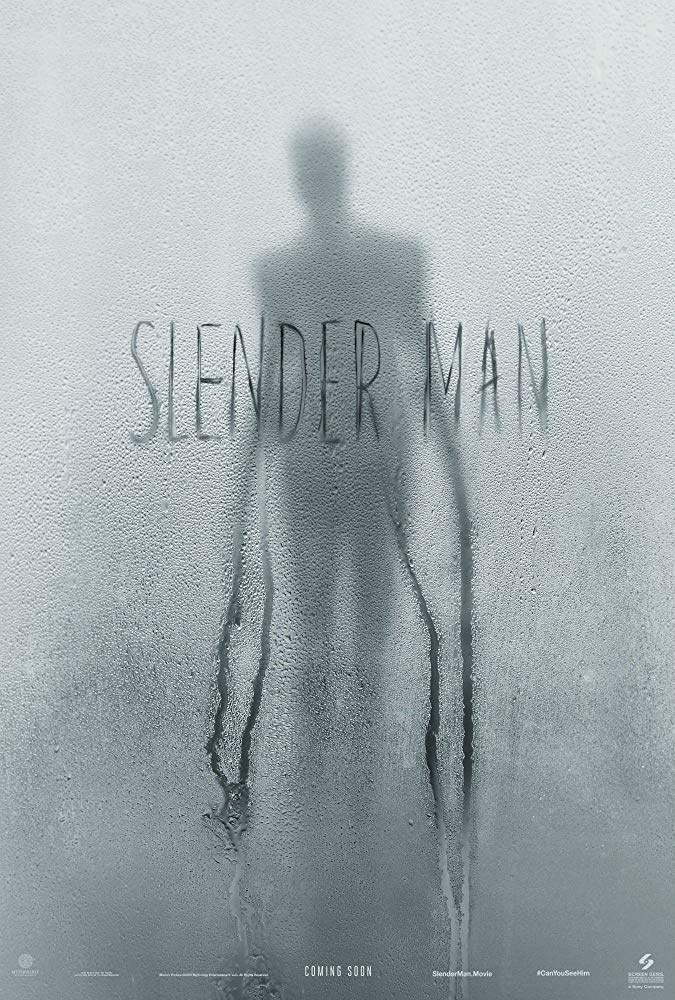
I have for reasons unknown recently become slightly obsessed with The Slender Man. The boogeyman was created in a meme by one Eric Knudsen on the Something Awful forums back in 2009. The character is a tall, thin man who abducts and/or kills children, depending on his by now many variations. He’s the thing a good horror movie is made of, enough so I have started my pursuit of finding the best one. So far, it has been slim pickings, and the eponymous movie – Slender Man – wasn’t quite the jumping-off point I had hoped it would be.

The plot follows the aforementioned concept closely, with a group of girls summoning The Slender Man by watching a video, and… Honestly, that setup falls flat from the beginning. It worked well with The Ring, but things get a bit shaky when we swap out a physical V.H.S. tape with an online video. Put that sucker on YouTube, and it would literally be watched by millions once the word got out. The Slender Man wouldn’t possibly have time to stalk them all, but let’s put that digression aside.

After one of the girls disappears, the rest of the group starts investigating the phenomenon, with The Slender Man always just a few steps behind them. Again, a solid concept and the first fifteen minutes of Slender Man are promising: stylish filming, with a decidedly indie vibe flowing throughout it. A good cast, too.

And then it sort of just stops.

Exactly what happened is hard to say, but it feels like the script was written for a thirty-minute long movie, giving the director sixty additional minutes to flesh out. This results in nightmare sequences that feel vaguely Phantasm-like, but which are ruined by a complete lack of lighting and cohesiveness. Outside of those scenes, the investigation into The Slender Man takes up most of the screen time, though they seem random and never do much to advance the story. After the first half an hour, the movie just kind of is.

It’s too bad, and the young cast deserved something better to work with. When the biggest mystery for the viewer is figuring out where The Slender Man got his spiffy suit from, you know the movie has issues.

Slender Man is not a recommended watch, then. So far, Butterfly Kisses, which I’ve previously reviewed, is the better variation on the story that I’ve tracked down.

But, the hunt continues.

The Trailer

More Slender Men

We continue our walk through other Slender Man inspired movies. Our current ranking:
  1. Butterfly Kisses
  2. Slender Man
  3. The Tall Man

Satanic Panic

Comedic Horror

/ Remi
Satanic Panic cover

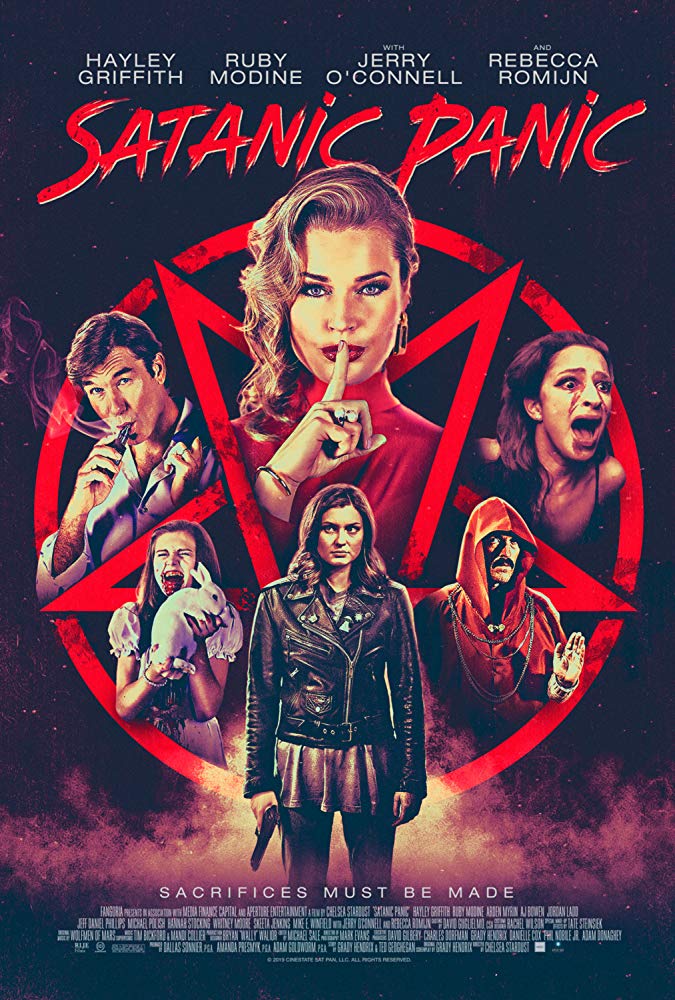
Down on her luck and forced into the pizza delivery racket, Sam is having a bad first day at work. After continuously being stiffed for tips, she reaches a breaking point and elbows her way into her last stop of the day, demanding the party pay her what she deserves. The gathering, on the surface, looks like a fancy pyramid-scheme party, which it kind of is (Death to the weak! Wealth to the strong!), just with a goal of conjuring Baphomet. And Sam is exactly the sacrifice needed to complete the summoning.

Satanic Panic is a fun movie. Demented, but hilarious. The script, written by Grady Hendrix, delivers sharp dialogue, without coming off as a sixties horror parody. Because there is no doubt, Satanic Panic is inspired by the era. Rosemary’s Baby is an obvious story reference point, with colors and cinematography reminiscent of something Mario Bava could have shot during his prime.

Soon, after having been trapped by the cult, Sam manages to escape (after a memorable encounter with the imitable Jerry O’Connell), saves another prisoner, Judi (Ruby Modine, who was excellent in the Happy Death Day movies), and the chase begins.

Through and through, director Chelsea Stardust delivers a well-executed movie with Satanic Panic. The cast, led by Hayley Griffith as Sam, does not veer into camp territory and casting Rebecca Romijn as the high priestess was a stroke of some genius. Arden Myrin – who was also great in the Showtime series, Shameless – hits a perfect game, landing all of her character Gypsy’s wonderfully ridiculous lines

It bears repeating: Satanic Panic is a horror movie in the classic sense at its core, but it has the modern twist of a smart comedy.

Is it perfect? Not entirely, and some of the continuous jokes (like the code of the Sams) fall a bit flat, particularly when they become integral to the plot. A story element about Sam being a cancer survivor, too, seems shoehorned in, to back one of the movie’s central conceits.

But by all means: Satanic Panic is a very, very good movie. Almost flawlessly executed on the technical side, with a clever script and a great cast. It sits high on my list of last year’s best horror movies.

Bonus Chelsea Stardust watch!

Stardust directed All That We Destroy, which is available on Hulu as part of the Blumhouse produced anthology, Into the Dark. It stars Israel Broussard, who also co-starred in Blumhouse’s Happy Death Days movies.

Bonus Happy Death Day and Blumhouse connection fact!

Stardust used to be Jason Blum’s assistant, so any and all connections to Blumhouse aren’t coincidental.

Bonus satanic panic read!

The House of the Devil is also a very good satanic panic film, though not a comedy.

The Trailer

You: Season Two

Stalker Soap

/ Remi
You: Season Two cover

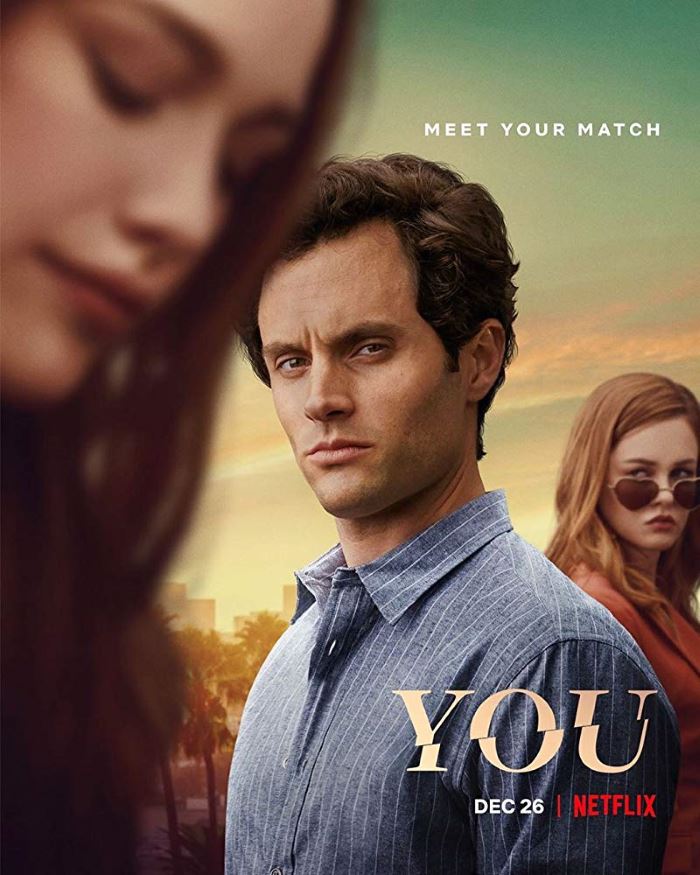
Lifetime’s loss is Netflix’s gain, and after making the first season of You an unlikely hit, the streaming giant is back with a follow-up.

For those in need of a reminder: You followed Joe, a stalker extraordinaire with a penchant for killing anyone coming between him and his target. In the previous season, his love interest, Beck, ultimately had to pay with her life, and John Stamos – sadly not as himself or Uncle Jesse, but rather Beck’s counselor – was convicted for all of Joe’s crimes.

Season two finds Joe on the run in L.A. from a former belle, who, while thought to be dead, now is hellbent on bringing Joe down. Joe hates L.A., a city unfitting for his East Coast bookish persona, but he soon finds a new love interest to take his mind off his worries. A love interest, literally: The target’s name is Love, and boy are puns abound.

Joe follows Love, learns all about her, and manipulates his way into a job at her über-L.A. market/cafe, Anavrin. (Read it backward, and release an entirely appropriate groan.) He makes himself an integral part of her life, befriending her wannabe director brother, filling the role of her deceased husband, and is generally as charming as one reasonably can expect a stalker to be.

In case there is any doubt: season two is as much of a guilty pleasure as season one. If anything, it’s even guiltier and more pleasurable, if not necessarily better. The initial season was contained to a smaller, intimate story, with a couple of smaller B-plots. This time there is an additional major storyline that sees Joe trying yet again to save a family in trouble, and there is also an unnecessary deep-dive into his past. The first season already touched upon Joe’s childhood in some detail, but here they have gone all-in, and Joe’s foibles are laid bare to the point where any and all mystery around him is gone. It’s too bad, as the blank slate presented in the first season was more of an interesting plot device.

The secondary storyline is more interesting. Joe has well-honed intuitions about other antagonists, and a comedian who is giving his underage neighbor just a little bit too much attention soon becomes the target of his ire. No points for guessing which direction that story takes, but how it ties back to the main plot is less predictable than what I would have expected.

And Joe, Joe is still likable. He has good taste, is friendly and helpful, and he genuinely thinks he wants to save people. He is, of course, also a killer, and for every body that falls, he has an excuse. It was an accident or self-defense. The person had to go down, or he’d hurt others. That kind of thing. I’m no counselor – I leave that to pros like John Stamos – but I’d wager Joe would be classified as a sociopath.

As with the first season, Penn Badgley deserves a lot of credit for making this mess of a soap opera work. He plays it straight, and not for a moment does he fall into the trap of giving a knowing wink to the audience. That is particularly impressive seeing he’s on screen for the vast majority of the ten episodes. The supporting cast also holds its own, and Victoria Pedretti jumps both feet in as Love, a character who ends up having what only can be described as a weird arc, wrapped up in the last episode’s deus ex machina ending.

That tenth episode is odd. For nine episodes, You has a decidedly Mr. Ripley vibe, but then suddenly turns into… I don’t even know what. Over the top as You is, its final twist is preposterous.

With that said, the very last scene provides a good setup for a season three that we undoubtedly will be treated to soon. I’ll still be watching – this type of a car wreck is one that’s hard to take your eyes off.

The Trailer

Black Christmas (1974)

Christmas Cheer

/ Remi
Black Christmas (1974) cover

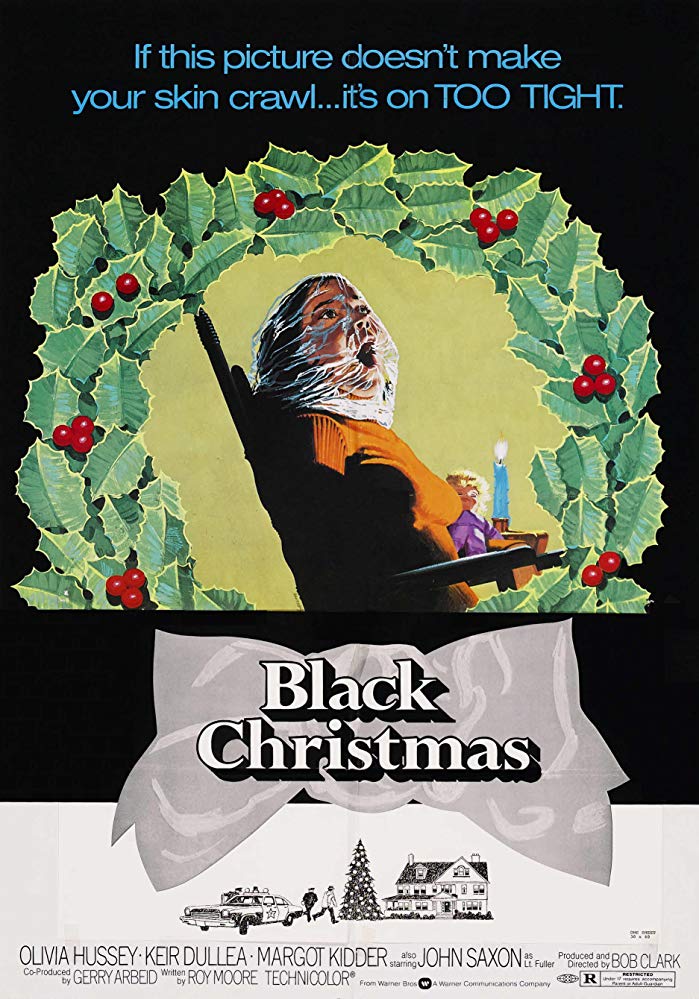
There is a variety of movies which, with some correctness, could be named the first American slasher. Psycho is a valid example, as is Peeping Tom. I see those more inspiration points for what was to come, and in my eyes, Black Christmas was the first true red white and blue slasher.

Directed by Bob Clark – whose A Christmas Story likely is the more familiar entry in his holiday œuvreBlack Christmas follows a group of sorority girls who, at the beginning of their Christmas break, starts receiving creepy phone calls. Soon, one by one, they begin to disappear.

Today, that ultra-simple premise has been done to death, but there wasn’t really anything quite like it 1974. The unseen killer (who may or may not be named Billy) is mostly concealed through the movie, and his voice is scrambled into an almost unintelligible rasp on the phone. Much like Michael Myers and Jason Voorhees, Billy is a faceless blob (as Myers was known as), designed to be a screen on which to project your own fears. The eerie parts in Black Christmas are not those you see, but rather the ambiguous details which drip in through the film.

As opposed to many subsequent movies in the sub-genre, Black Christmas shows restraint. It is violent, but not even close to what we take for granted today. More interesting than who is killed is who the killer is, and what motivation (if any) he is operating under. That is never outright revealed, which makes the movie a whole lot more disturbing in the it feels like somebody’s watching me sense. It’s a movie that could and should be watched more than once.

The Scream Queen concept was also not a thing in 1974, and the mostly female cast work outside the genre’s future tropes. Star Olivia Hussey portrays Jess as a quiet, contemplative character, and even her brash friend Barb – beautifully portrayed by the late, great Margot Kidder – is even-keeled. The character closest to approaching any hysterics is Lt. Ken Fuller, which, today, is somewhat comical. (Let it be said, though: John Saxon brings it as brilliantly as he always does.)

Black Christmas maintains its slow, tense pace throughout, never succumbing to taking that one extra step over the top its successors soon would attempt. Who Billy is, remains a mystery, and that makes the movie that much better.

Meanwhile, in an alternate reality

Billy could have returned for a different holiday. When a Halloween horror concept was shopped around, it was briefly considered to be a vehicle for a Black Christmas sequel. Black Halloween never happened, and I assume few would be surprised what the concept was turned into. (For more, edify yourself with my Halloween 3 and Halloween 6 write-ups.)

Remake mania

Black Christmas was remade as a less than successful teen-scream in 2006. A completely re-imagined remake was released last week, though it seems odd to me that they decided to ride the Black Christmas name instead of something original. The movie has little to do with the original concept.

The Trailer