One Star Classics

Articles

Under the Silver Lake

Neo-noir

/ Remi
Under the Silver Lake cover

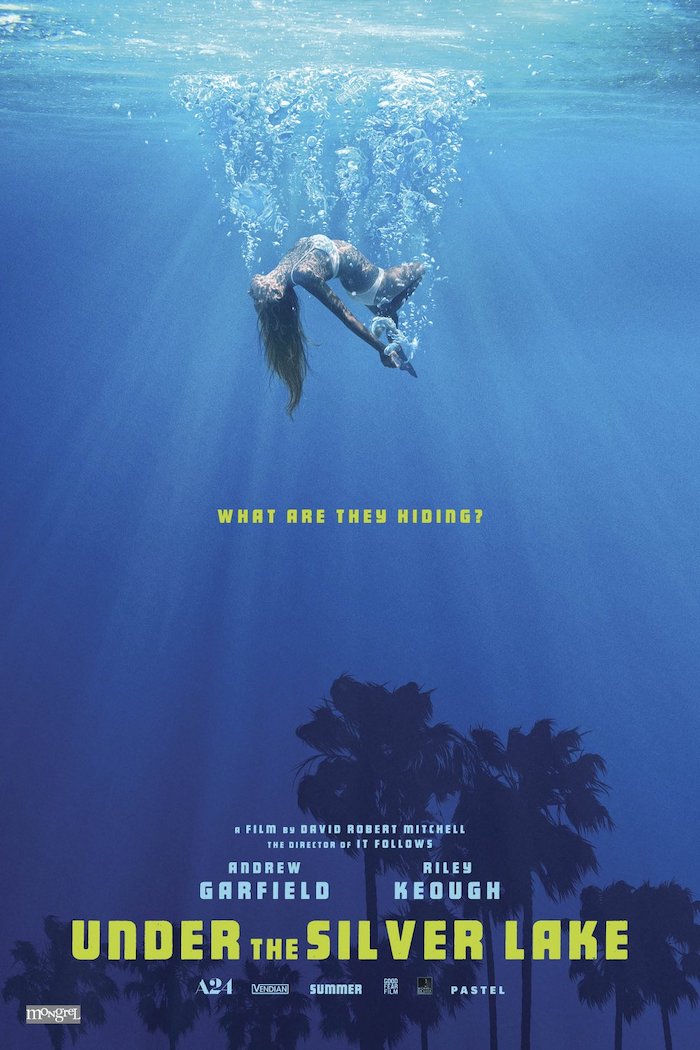
A young man meets up with his neighbor, Sarah. They spend the afternoon together and agree to see each other again the next day. When Sam shows up at Sarah’s apartment, he finds it empty and abandoned, with few clues to explain her abrupt disappearance. So starts his quest to find her in Under the Silver Lake, a movie-puzzler from David Robert Mitchell, the auteur best known for his 2014 chiller, It Follows.

And a puzzler Under the Silver Lake is. Partly inspired by eighties and nineties LucasFilm adventure games (Maniac Mansion and Monkey Island are stated examples), it’s a movie you can watch from start to finish and feel however you want to about it, but which requires multiple viewings to solve all its puzzles. Many plot points seem unfinished at first glance but pay close attention, and hints will lead you through a larger story. Who the dog killer is — essentially the backdrop for Under the Silver Lake — is an easy one to start with, while symbols, events, and seemingly secondary characters are more than meet the eye. Many movies have diffuse plots, but Under the Silver Lake leaves more to pragmatic problem-solving than subjective interpretation.

On paper, there are similarities between It Follows and Under the Silver Lake, as many of the same ingredients were used for baking both movies. Each is hypnotically shot and come accompanied by Disasterpiece soundtracks while featuring a set of appropriately understated performances from the actors. Follow a checklist, and the movies have a wide overlap on the Venn diagram. Compare the two’s execution, though, and you get two very different creatures.

Still from movieStill from movieStill from movie

The soundtrack illustrates it well. While It Follows featured Disasterpiece’s signature 8-bit console chipsound, Under the Silver Lake has the stylings of something not miles away from Bernard Hermann. Same artist; two great soundtracks; vastly different styles.

Mitchell shows himself as a director with equally well-rounded talents. The bleak palette of It Follows has been replaced by thematic blues and is paced with an eerie, dreamlike flow that echoes Stanley Kubrick’s Eyes Wide Shut. In fact, Sam’s journey through the underbelly of L.A. can in many ways be compared to that movie, down to being a source of polarizing opinions. Some consider Under the Silver Lake dull and obtuse, while others appreciate its mesmerizing aesthetics and peripheral puzzles. I sit with the latter group, and I also believe you can enjoy the movie for what it is on the surface: an eerie, well-executed thriller. Watching the film multiple times is rewarding, mind you, and figuring out the puzzles is satisfying.

Either way, Under the Silver Lake is worth checking out if only to have an opinion about it. It’s currently streaming for free on Prime Video.

Bonus fact! Sam’s ringtone is the theme from the Commodore 64 game, The Last Ninja. Mitchell once again shows his appreciation for the classics. Download the MP3, written and performed by the late Ben Daglish.
The Trailer

Lucifer

Devil TV

/ Remi
Lucifer cover

Mix one pinch Reaper into a hefty dose of Remington Steele, and you have Lucifer, a throwback show that just saw its fourth season debut on Netflix after it was unceremoniously canceled by Fox last year.

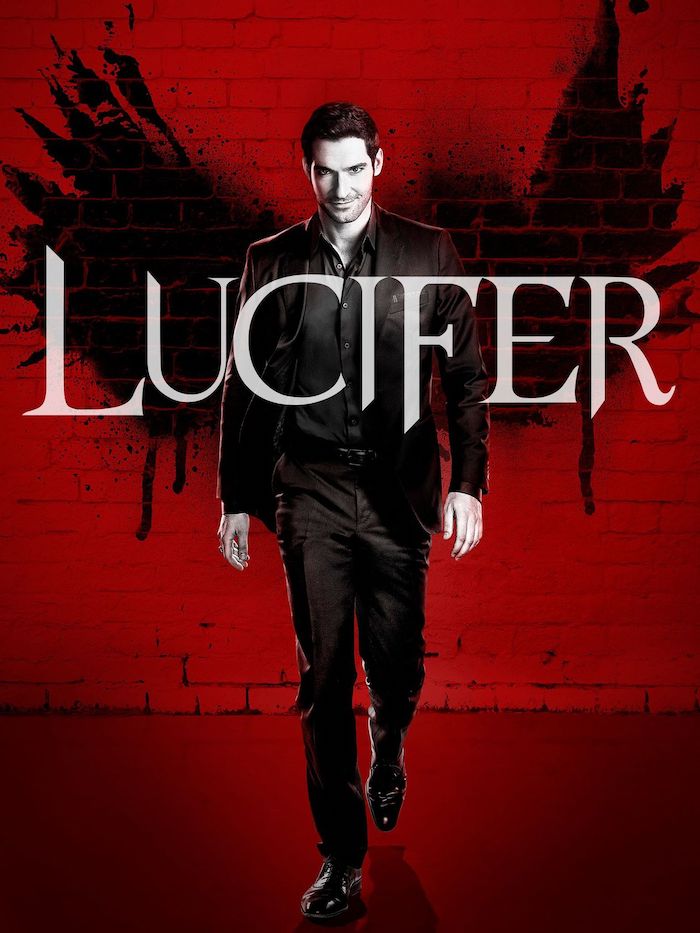
Tom Ellis stars as the titular character—the devil—who has made his way to earth for an extended vacation. He owns a night club, lives his days in debauchery, and has little interest in going back to overseeing demons and lost souls in hell. Additionally, he has managed to become a civilian consultant with L.A.P.D., where he finds a strange kinship with his assigned partner, Detective Chloe Decker (Lauren German).

It’s a procedural with a twist, and the similarities between Remington Steele and Lucifer are uncanny. It ranges from the basic premise—a female law enforcement professional teaming up with a mysterious, suave civilian—to character traits, like the formal ways the male anti-protagonists refer to their more competent partners: Steele, Ms. Holt; Lucifer, Detective. There are even comparable gimmicks, with Brosnan’s old movie references paralleling Ellis’s devilish now tell me… what is it that you truly desire? interrogation line.

And let it be said, Ellis makes an excellent Lucifer Morningstar. His character is charming and self-centered, and keen on pointing out that he is not evil. His job and curse are to oversee doomed souls in hell, but that, in his mind, does not make him the bad guy. That’s the core of the character, a fallen angel who is butthurt he has gotten the reputation of being a villain. It’s a very different take from what Ray Wise delivered in Reaper.

The rest of the cast holds an equally high standard, and particularly Lesley-Ann Brandt delivers an excellent performance as Lucifer’s demon ally, Mazikeen.

It might not be the most profound meditation on the Bible, but Lucifer is an entertaining procedural, and it utilizes old testament lore to great effect. Giving a character in any show an overbearing brother is one thing; making the brother an angel with daddy issues adds some well-suited twists.

More than anything, Lucifer marries the best of the lighter eighties crime fare with the current trend of working with darker mythology. It is a well-balanced show, and it brings its own je ne sais quoi to the table. Kudos to the Netflix for taking a chance on saving Lucifer. It wasn’t a huge hit on Fox, but the fanbase was rabid enough to make it worth the streaming giant’s while, and we’re all better off because of it.

Throw Lucifer in with Sabrina, and Netflix has quite the run of devil based shows going right now.

The Trailer

The Girl in the Photographs

B-Thriller

/ Remi
The Girl in the Photographs cover

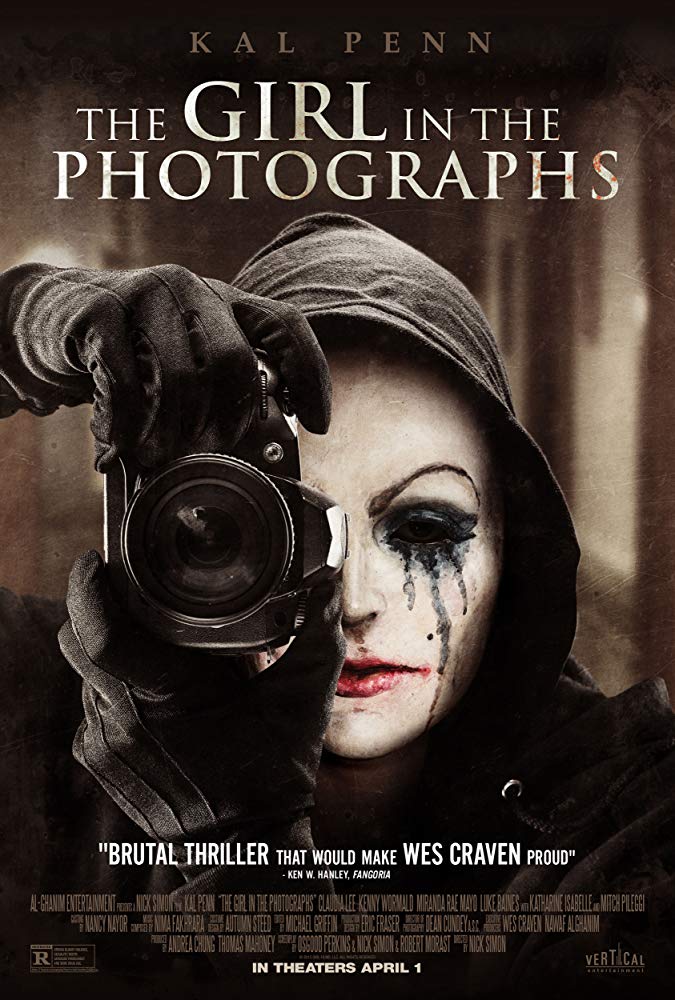
There are some movies that just exist. They’re not bad, they’re not good, they’re not even average. They just are. The Girl in the Photographs is, at its heart, one of those movies, one you on the surface should forget as soon as you have watched it. But, and there is a but here! The Girl in the Photographs might not be the most memorable of ninety-five minutes you’ll ever experience, but there is one performance that serves as something more than just a saving grace: I give you Mr. Kal Penn.

Penn—best known for the Harold & Kumar films—isn’t even the star of the movie. Claudia Lee has that dubious honor, and she doesn’t get much more than the baseline horror-thriller material to work with. You know the drill: stalked by a serial killer who leaves photos of his latest victims for her to find, she now has to deal with being the possible next victim. That kind of thing. Not exactly thrillingly deep, but then, something suitable for a lazy Sunday if nothing else.

Where The Girl in the Photographs strikes gold is with Penn’s portrayal of a narcissistic photographer who becomes obsessed with the serial killer’s work. Convinced that he is copying his style, and resentful that the photos are more edgy than his work, Peter Hemmings (named after David Hemmings from the classic Blow Up, and based on real-life photographer Terry Richardson) brings his crew to the small town where the photos appeared. You can probably guess where it goes from there.

Penn is absolutely great in this film. Every snarky comment, every carefully worded insult, every aloof mannerism hit home. The Girl in the Photographs isn’t a comedy, but Penn’s character works perfectly on a Scream-type level. Each time he appears on the screen, you know something sardonically watchable will happen, and Penn clearly is having a good time with the role.

And that is all that is required, really. The rest of the movie is there to serve up this great, dark humor. It might not happen enough, but it’s always worth the wait.

Watch The Girl in the Photographs for what it is: something easily digestible. There aren’t many scares, but the laughs you get makes it worth the ride and Kal Penn is in my mind a golden god.

Bonus fact!

This was Wes Craven’s last film—he served as a producer. It seems doubtful if the marketers knew that.

The Trailer

Terrifier

Clown Horror

/ Remi
Terrifier cover

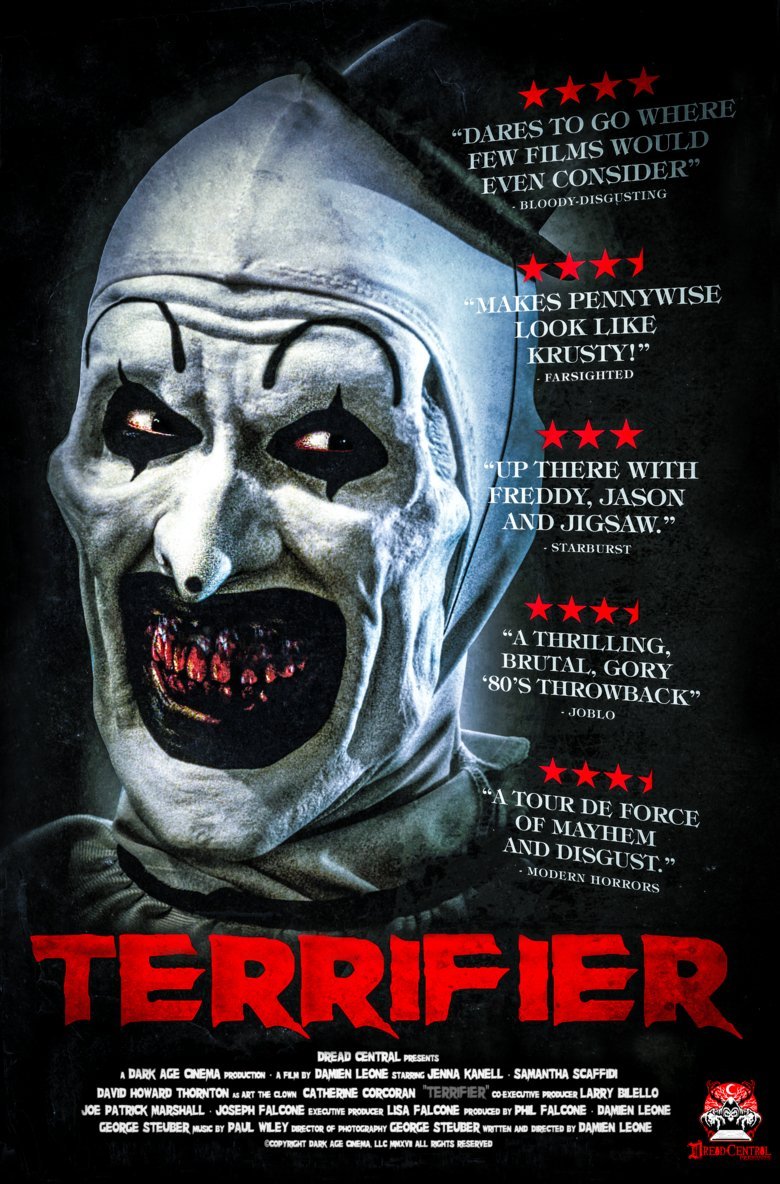
So, here is a rarity: a modern slasher that largely avoids the traps its contemporaries often fall into. Terrifier echoes the eighties classics when the violence was ridiculously over the top, and the antagonists had personalities distinct enough to make them equivalents to today’s superheroes. It was hard to take those movies too seriously, yet they were still suitably scary and macabrely entertaining, without going borderline snuff like many do today.

Terrifier’s seemingly straightforward plot is set during Halloween, with Tara and Dawn (Jenna Kannell and Catherine Corcoran) getting ready to head home from a party. On the way to the car, they encounter a silent clown whose behavior switches between being playful (albeit creepily so) to giving dead-eyed stares. As the clown’s actions grow increasingly bizarre, the girls head off to the car, only to find their tires slashed.

If the setup sounds like a slasher trope, it’s because it is, yet Terrifier is a stylish entry to the genre. Director Damien Leone has a background as a makeup artist, and he has put his talents well into use with Art the Clown (as his name is). The character looks downright demented.

Art and a future victimArt the clownFuture victim, part 2

Visually, too, the movie is well executed. The apartment building where the brunt of the movie takes place is claustrophobically filmed. The narrow hallways and sharp corners are aesthetically similar to many Italian gialli, and particularly Dario Argento’s Deep Red looks to be an aesthetic reference point.

David Howard Thornton’s performance as Art is terrific. The actor is a trained mime, and he shows a natural comfort with a clown’s movements and mannerisms, giving the character a real menace. Art shows similarities to an early Freddy Krueger—macabrely funny, with just the right amount of ominousness thrown in—and Thornton channels his inner Robert England well.

It is too bad there is one scene in Terrifier that is unnecessarily cruel. One can claim that’s the nature of the slasher, but the best of the genre tend to go over the top to where it is hard to take it seriously. The scene in question (and you’ll know it when you see it) is a distraction from the many things that make this a good movie, which it really is, sitting at 73% certified fresh at Rotten Tomatoes. Not bad for a film that seemingly was designed not to be a mainstream hit.

Bonus trivia!

Terrifier is a sequel, of sorts, to All Hallows Eve, an entertaining anthology film not unlike Tales from the Crypt. There was an actual sequel to it, too, but it was produced by a different team, and Art is not featured in it.

Images borrowed from IMDb.

The Trailer