One Star Classics

Articles

Creepshow (2019)

TV Horror

/ Remi
Creepshow (2019) cover

To properly understand why the Creepshow movies1 work, you need to understand their spiritual predecessor. EC Comics’ Tales from the Crypt delivered horror stories with edifying conclusions from 1950 to 1955, not unlike modern fables. It was something Stephen King and George Romero took to heart when they created their homage movies: a handful of short stories with demented morals, bound together by an overarching plot.

Thirty-two years after the second movie comes the proper follow-up in the form of a Shudder show. It is, if nothing else, an interesting entry in the franchise. It presents itself like Creepshow, but as it only has taken superficial inspiration from Tales from the Crypt, it ends up being something different. It’s odd. The fact that the show mainly was influenced by Creepshow and not Tales from the Crypt makes it feel less like Creepshow than it could have. It’s a good show in and of itself, it’s just not much of a Creepshow.

To wit, basing the first story on Stephen King’s Gray Matter is a suiting nod to the movies, but, creepy as the story is, it does little to deliver any sort of demented lesson. This matters, simply because the dramaturgy of both Tales from the Crypt and the original Creepshow was built around their endings. When the moral of the story is missing, we’re left with an eerie watch and a good showcase for old pros like Adrienne Barbeau and Tobin Bell. Of the four stories, only one – the darkly comedic The Finger – comes close to being reminiscent of the originals.

Too, The Creep (the crypt keeper who is supposed to introduce the stories) has little in common with his predecessors. He’s there in imagery but has no speaking parts, and there’s really no reason for him to be in the show.

This does not change the fact that, for most people, none of that matters. While the heart and soul of Creepshow have changed, it’s still a well-developed show. Each episode is written and directed by different people, all of whom are of high caliber. Names like David Bruckner (V/H/S) and Greg Nicotero (The Walking Dead) add some gusto to the credit list.

I’m of two minds, then. Creepshow isn’t a particularly great entry in the franchise, but it’s a good standalone anthology. And judging from the upcoming episode descriptions, a story like Skincrawlers from Paul Dini (of Batman: The Animated Series fame) sounds more like the movies and comics of yore.

We’ll see. Misgivings aside, I’m still watching the show, which means they’re doing something right.

Creepshow is streaming exclusively on Shudder.

1 Minus the third one which existed in name only.
The Trailer

Puppet Master: The Littlest Reich

Doll Horror

/ Remi
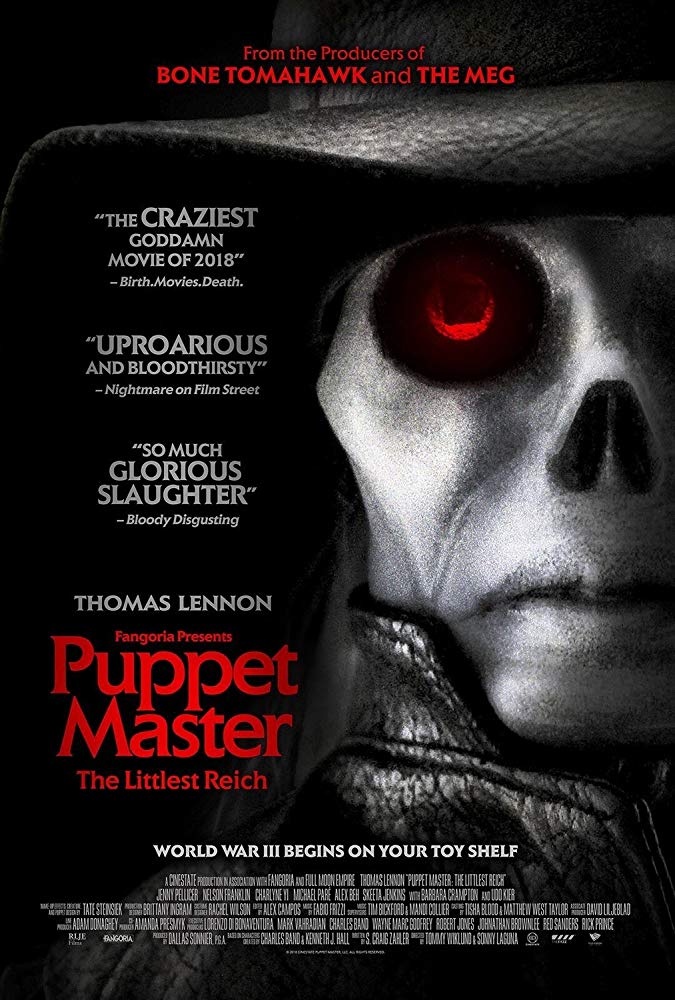
Puppet Master: The Littlest Reich cover

One has to wonder what kind of producer in 2018 would have thought Puppet Master: The Littlest Reich to be a good idea. This does not come from the perspective of me disliking the film, though I wouldn’t go as far as saying I like it in the conventional sense either. The whole mess of a movie is just utterly fascinating to me, if only for just existing.

The plot, of sorts, follows a comic book artist aiming to auction off a World War II-era puppet at a convention dedicated to doll maker André Toulon. That’s Nazi doll maker André Toulon. Needless to say, all the puppets come alive and start taking out the convention goers, focusing mainly on minorities, as Nazi dolls are wont to do. It’s hard to overstate how exploitative this movie actually is.

The Littlest Reich is the twelfth movie in the Puppet Master franchise, and while it serves as a reboot, it has its feet firmly planted in its 1980s schlock origins. Digital filming aside, everything screams eighties, down to featuring Barbara Crampton in a central role. (She is the best part of the movie, for whatever that’s worth — note that her part has nothing to do with her appearance in the first movie.) There is not a page in the Book of Gratuitous Filmmaking the directors didn’t read, learn, and applied, with violence so over the top it’s nigh impossible to take seriously. Kudos to the makeup and practical effects artists, mind you — the scenes are gleefully well executed, so to speak.

Puppet picture

I could go into the bizarreness of the story — how much damage could eight puppets, Nazis or not, really do on a grander scale? — but the heart and soul of the movie is its star, Thomas Lennon. What on earth is Thomas Lennon doing in a C-movie that only charitably can be said to have reached cult status? Even if you don’t instantly recognize the name, you know the actor from Reno 911 (as short-shorts wearing Lieutenant Dangle) and Santa Clarita Diet (as the principal). More than that, he has as a writer of such franchises as Night at the Museum, produced movies that cumulatively have grossed one-point-four-billion-dollars. The Littlest Reich has so far pulled in $600,000.

And I can’t help but love that. Clearly, Lennon must be a fan of the original movies; it seems dubious to think he was doing The Littlest Reich for fame or fortune. He’s just there, being the same charming Thomas Lennon as in any other movie, doing his Thomas Lennon thing. It’s weird in the most awesome of ways.

Which really goes for the whole movie. It’s a low-cost production, and the directors evidently decided to double down on that. Some of the puppeteering is impressive, but I doubt the puppeteers were on site for much of the filming. The majority looks to be the product of somebody on a dolly, bobbing the puppets up and down to simulate movements. It’s downright reminiscent of Pinocchio’s Revenge.

I realize this sounds like backhanded compliments, and in a sense, I suppose that’s true: The Littlest Reich is objectively not a good movie. It is a fascinating movie, and is that such a bad thing? I don’t think so, and The Littlest Reich should at least entertain fans of the genre. And in case there was any doubt, the cliffhanger ending is a setup for not only a sequel but also a spin-off.

If that’s a good thing or not, remains to be seen, but I’d be hard-pressed not to think those will be fascinating too.

The Littlest Reich is streaming on Shudder.

The Trailer

Rebirth

Paranoia Thriller

/ Remi
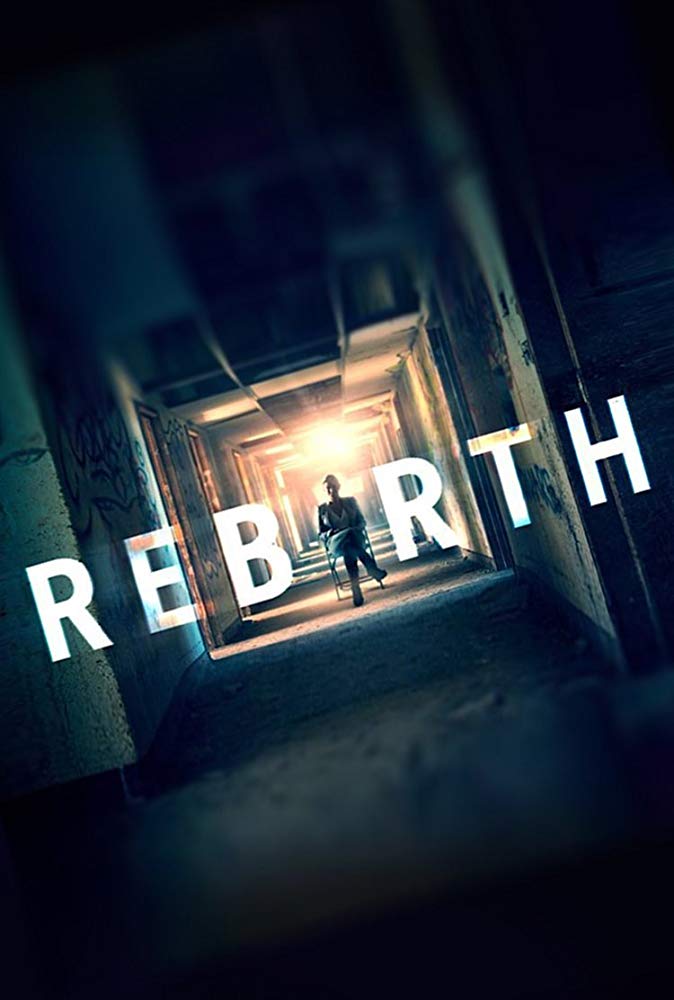
Rebirth cover

I unapologetically endorsed Karl Muller’s Mr. Jones, to the point where a reference to my review was removed from Wikipedia under suspicion of having been planted by the director. Hey, the heart wants what the heart wants, and I wanted people to like Mr. Jones.

For whatever reason, I since missed that Karl Muller made a Netflix movie back in 2016. Seeing that he has not made another film for the service since should probably have been enough to curb my excitement, but like I said: The heart wants what the heart wants.

Rebirth sees office drone Kyle invited by his long-lost friend Zach, to what seemingly is a self-actualization retreat. All he is told is that Rebirth spans a life-changing weekend, with all contact with the outside world cut off.

If you’ve seen The Game, you have a pretty good idea what Rebirth is. Throughout the weekend, Kyle gets caught in a number of mind games, some outright violent, all in the guise of self-improvement. In that sense, the movie isn’t particularly original, yet a few facets go a long way to make up for that.

For one, Muller knows how to set up a shot – even the found footage Mr. Jones looked the part – and he utilizes a bleak color palette well. Kyle’s descent into paranoia might not be backed by an out of the park script, but it sure is a pretty journey.

The cast does a commendable job. I have previously postulated that Muller must be a fan of David Lynch, something casting Sheryl Lee (Laura Palmer in Twin Peaks) in Rebirth seems to confirm. Her role is small, but it’s always good to see her on-screen.

The great Adam Goldberg – a truly underutilized actor – portrays Zach, the real question mark of the movie. What his involvement with Rebirth is, serves as the underlying nerve of the film.

Of course, what Rebirth is, is pretty self-evident early on, and the parallels to Scientology aren’t particularly subtle. That the program for all intents is a cult is presented flat on the nose when Zach serves up Kool-Aid as a refreshing beverage. (And props to Goldberg on his timing in that scene, which easily is my favorite moment in the movie.)

An original concept it is not, but Rebirth pulls it together reasonably well in the end, almost literally so. Some of the best scenes are the Rebirth recruitment videos that play over the credits.

Brush some misgivings aside, and I do think Rebirth is worth a hundred minutes of your time. It’s not like you’re not already paying for Netflix. The technical craftsmanship and performances were enough to hold my interest in lieu of a sparkling script.

And compared to Mr. Jones? I will to my grave maintain that film is a masterpiece. Rebirth might not reach those dizzying heights, but I will still firmly stay in Karl Muller’s corner, awaiting a new movie I this time will not miss by three years.

The Trailer

Hell House LLC III: Lake of Fire

Found Footage Film

/ Remi
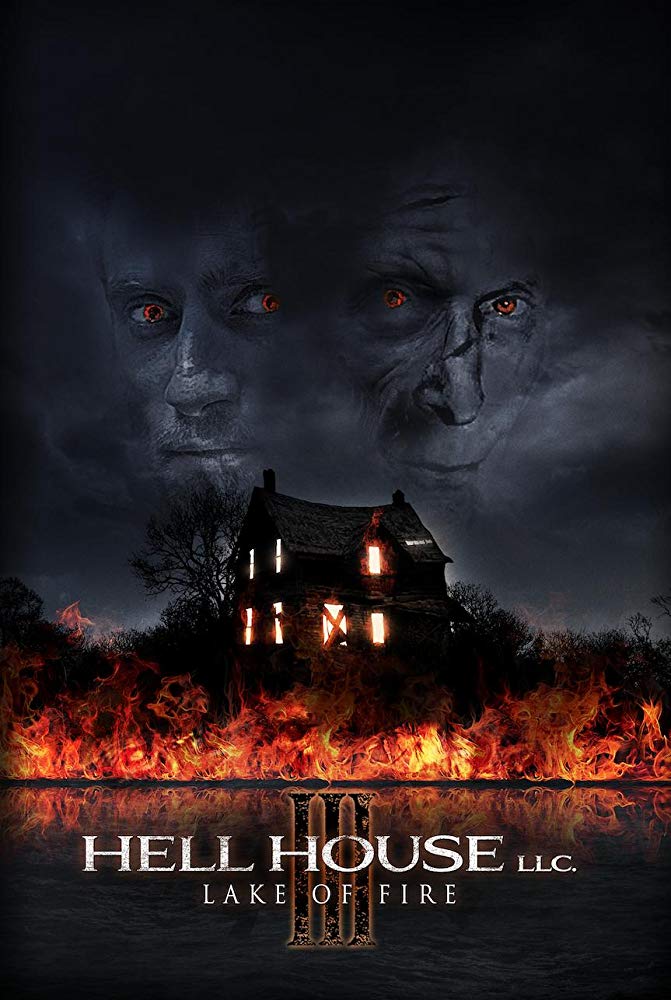
Hell House LLC III: Lake of Fire cover

It’s probably unfair to judge an entire trilogy solely on the second entry’s third act, but to me, The Abaddon Hotel took the Hell House LLC series in such an ill-advised direction, it was hard not to. Usually I’m all for overarching lore, but the this is what it all was really about from the beginning construct the second film went out on, cheapened the previous five acts more than they deserved. Likewise, it served as a foreboding sign of where the Hell House LLC franchise would go next.

Now we have the final entry, the Shudder exclusive Hell House LLC: Lake of Fire1. For those who approach the movie with hesitation, I will say this: I’m surprised writer/director Stephen Cognetti managed to course correct the plot back to what made the original work, while still holding on to the lore from the second film. Lake of Fire doesn’t live up to the weird mystery of the trilogy’s eponymous first entry, but it does make the mythos a whole lot more tolerable.

Set nine years after the original events, Lake of Fire follows a television crew covering tech tycoon Russell Wynn’s modern take on Faust at the Abaddon Hotel. The location, as viewers of the previous duology may recall, serves as the gates to hell, which, other than thematically suiting Faust, generally seems like an unfortunate location for literally anything else.

Like its predecessors, Lake of Fire has all its found-footage tropes out in force, albeit to a serviceable effect: Out of focus apparitions, mannequins changing positions within the blink of an eye, a creepy melody appearing from a piano. You’ve seen it all in many movies before, but Lake of Fire utilizes the techniques well. There’s a timing required to make these clichés seem creepy, and Cognetti must have spent a good amount of time in the editing room puzzling the pieces together just so.

The storyline paces fairly well, even though it has gotten formulaic by now. A first-person perspective of a play in a haunted house — or above the gates of hell as it is — faithfully follows the previous movies a bit too closely. While the scares are well-implemented, the gee-whiz surprise factor is less striking this time around, though understandably so. Mess too much with the formula, and it no longer is a Hell House LLC movie, leaving you with a damned if you do, damned if you don’t dilemma.

Then there’s the lore, which seemed shoehorned into The Abaddon Hotel without much grounding. In Lake of Fire, the mythos is tied to Russell’s backstory, and exactly how the two intersect is the core mystery of the movie. Why did Russell decide to place the play in Abaddon? What are his connections with a local priest? What is the significance of his car accident ten years back?

In general, I don’t think the lore ever was solid enough to base a whole franchise on, particularly since portal to hell movies are a dime a dozen. (Check out Fulci’s Gates of Hell trilogy for some more imaginative takes.) The aforementioned course correction still leaves us with a climax that has more ambition than the movie had a budget. I respect the ending, but the failed attempt of grandiosity sends the final moments out with a thump.

Much better are the end credit sequences, which, instead of being bonus filler, is the unexpected glue that binds the trilogy together. I found the sum of them a whole lot more satisfying than the real ending.

Lake of Fire is a recommended watch for fans of the franchise — all of whom will already have watched it by now, I’m sure — and the Hell House LLC trilogy is overall worth checking out for those who can stomach the overused found-footage sub-genre.

Lake of Fire is currently streaming exclusively on Shudder. You can also read my article about the previous two movies.

1 I’m fairly sure there is no lake whatsoever in the movie, other than a quick allusion that seems to have been tossed in after the title was decided on.

The Trailer