One Star Classics

Articles

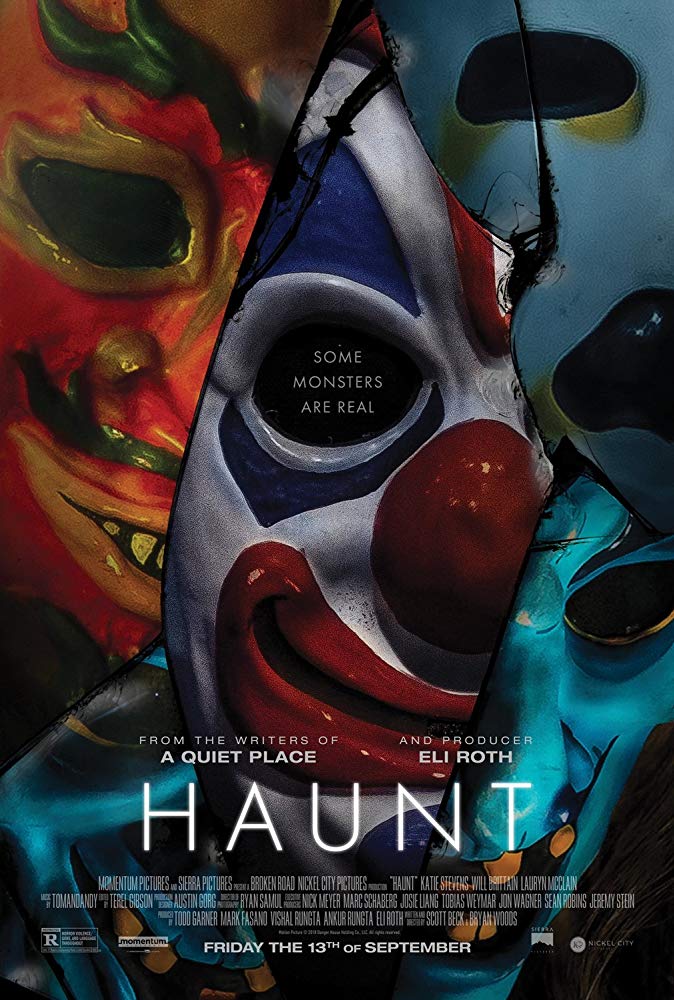
Haunt

Scary Abodes

/ Remi
Haunt cover

Give A.M.C.’s streaming service Shudder this: When they go in on an exclusive, they go all in, and Haunt is a good example of the pedigree they’re aiming for. The film was produced by Eli Roth, and written and directed by Scott Beck and Bryan Woods, the duo behind last year’s surprise box-office hit, A Quiet Place. That is a setup for something above the norm, though it starts off shaky.

Haunt’s plot is well worn. A group of friends tracks down an extreme haunted house, which is supposed to be, well, extreme. Not much else is revealed to the teens, other than the proceeds will go to Red Cross. It will come as no surprise that things soon turn deadly, and the house’s inhabitants are not what they seem. That’s really the gist of it, and when I initially read the movie’s description, I thought it was one I had already watched. (I cannot for the life of me think of the name of the one I thought it was, but I’d recommend it over Haunt at any rate. Update! It was Circus Kane.) Derivative movies can still be fun, and I will give Haunt this: It’s an entertaining ride if nothing else.

Katie Stevens – you may know her from the entertaining M.T.V. show, Faking It – leads a solid cast that doesn’t get a whole lot to work with. Heroine Harper has a bit of a Scooby-Doo edge to her (Thelma in particular), and she has, for reasons unknown, a bad feeling about the haunted house from the get-go. It makes little sense, as the house initially seems run-of-the-mill. (Though, and this is never actually mentioned, the kids probably should have figured out something was up when they didn’t pay for admittance. What proceeds is Red Cross supposed to receive?)

As the movie progresses, it becomes increasingly clear that the house is, indeed, designed to kill its guests, and a welcomed twist to the formula is introduced. One of the employees is seemingly taken by surprise that bad stuff is happening, and he sets out to help the kids. Or does he? I think you know the answer.

The story goes downhill fairly rapidly, and Haunt flirts not only with becoming a standard haunted house film but also with mid-noughties teen fare extravaganzas. I wouldn’t have been shocked to see a surprise walk-on from Paris Hilton.

On the plus side, Haunt has slick production values, and looks quite nice, with deeply saturated colors. The soundtrack is great. Nothing about the movie seems cheap, it just seems a bit lazy.

In the end, what is really odd about Haunt is that it feels like it at some point was supposed to be about something; I just don’t know what that something was. On the one hand there are suggestions that domestic violence is its prevalent theme, yet it sort of just comes and goes and is never tackled in any meaningful way. That gives Haunt an unbecoming exploitative touch.

On the other hand, there are also hints of the lore of earning your faces, but that, too, is never touched upon enough to make it understandable.

Haunt is not the home-run many felt A Quiet Place was, but if you already subscribe to Shudder, it’s worth a watch on a rainy afternoon. Just don’t expect greatness.

Likely the best name ever

One of the stunt doubles goes by Remington Steele, which is an impossibly cool moniker.
The Trailer

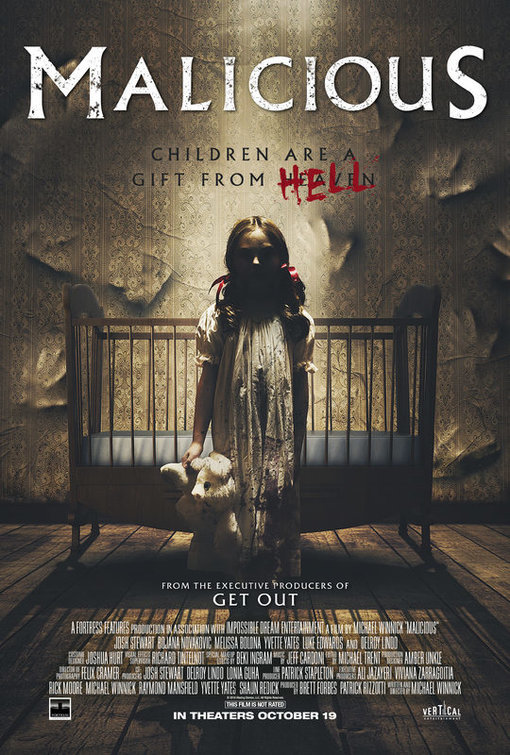
Malicious

Scary Abodes

/ Remi
Malicious cover

Browsing through Malicious’s IMDb profile, I was struck by its one and only trivia entry: This was Felix Cramer’s first feature film filmed in America. Now, who is Felix Cramer? A quick look at his credits reveals him being a German D.P., with a handful of movies to his name. This suggests to me that the trivia was either added by Mr. Cramer himself, or possibly a family member. And you know what? Good for you, Mr. Cramer!

There isn’t much to be overly excited about in Malicious, but objectively, the cinematography is of high quality. The movie itself is less than outstanding, though it is relatively effective at producing a handful of scares.

We follow Lisa and Adam, a seemingly happy couple, awaiting their first child as they’re moving into a new home. Here is – if you can set some genuinely dreadful dialogue aside – the movie’s first major misstep. If you’re making a haunted anything film and the majority of the story takes place in a house, it needs to be at least somewhat ominous. A suburban McMansion rarely works, Poltergeist being an honorable exception.

At any rate: Lisa meets a creepy lady in the woods near her house, who blabbers something about the baby. That night, Lisa has a miscarriage. A pretty bleak premise, particularly when the unborn starts haunting the house in various forms.

With that subject matter, I would hope Malicious’s tagline, Children are a gift from hell, is something a hapless marketer came up with having no idea what the movie’s premise is.

It’s made clear early on that the McMansion itself isn’t haunted, and that its apparitions are the effect of an opened spirit-prison box. Still, as the hauntings exclusively occur in the house, Malicious is firmly footed in the haunted house sub-genre, and the tropes are out in force. Mirror images taking on a life of their own; the spirit of a young girl turning into an old lady; footsteps from empty rooms. They’re all there, as is my personal favorite, the painting that changes as things go haywire.1

Yet, it is all executed very well, in no small part due to Mr. Cramer. There are some reveals and a pinch of flourishes with every jump-scare that elevates Malicious to something more than an average run-of-the-mill horror movie. The dialogue might be downright odd, and it gives the actors little to work with, but the way the film is framed is enough to make it interesting.

Malicious isn’t a home-run, then, but still worth the price of admission.2

1 Seriously, no flippancy intended. I love that stuff.

2 Free with Amazon Prime.

The Trailer

Upgrade

Cyber Thriller

/ Remi
Upgrade cover

Set thirty years into the future, Upgrade finds Grey Trace as the paralyzed victim of a mugging where his wife was killed. He has more or less given up on life when a billionaire presents him with an intriguing option: if Grey tests an experimental computer chip implant, he will also receive mobility and a chance to avenge his wife.

As much as futuristic technology plays a part in Upgrade, it still has the heart of a straightforward action movie. Grey might only be able to pull off his sick moves thanks to the implant, but those moves are still reminiscent of something from a 1970s martial art flick. That’s not a bad thing – quite the opposite if you’re a fan of the genre – but if you solely came for a story of dystopic warnings, you might be left disappointed finding a somewhat flat revenge story of Charles Bronson-esque proportions.

It should surprise no-one that the implanted chip, dubbed S.T.E.M., is sentient, and starts taking control of Grey’s body. That does give the run and kill person A, B, and C a bit of a twist, but still… You mostly get Grey running around, killing person A, B, and C.

Upgrade is still a technically well-constructed movie, and a typical Blumhouse release: high-quality production values, resulting in triple box office returns on the chintzy five million dollar budget.

Leigh Whannel, well known for the Saw and Insidious franchises, has put together a stylish movie, and the fight choreography sits front and center. Upgrade doesn’t fall into the trap of showing a blur of bodies bumbling around, but rather allows for clear and concise sequences, adding more of a heightened pulse than those of a faster-moving equivalent. If you are a fan of classic martial art movies, you’ll certainly find something to like in Upgrade. Sit around for a Saw-like twist ending, and it’s hard to argue the film isn’t entertaining.

And it is. Entertaining. You get some great fight sequences, bolstered by good acting and surprisingly sophisticated cinematography. Upgrade feels like a higher budget movie than it actually is. It’s not going to change the landscape of either the action, sci-fi, or thriller genres, but it still makes for an honorable entry into all of them.

The Trailer

Halloween III: Season of the Witch

Halloween Funsies

/ Remi
Halloween III: Season of the Witch cover

I assume it is widely known by now, but it bears repeating: the Halloween franchise was originally intended to be an annual anthology of unrelated, seasonal movies. In other words, the first Michael Myers slasher should have been a one-off, rather than the starting point for the behemoth it created.

Halloween was, of course, a huge hit, and a direct sequel was commissioned shortly after its 1978 release. It wasn’t until this third entry, Season of the Witch, the original plan of an anthology was put back in motion.

Season of the Witch, then, has nothing to do with Michael Myers. Instead, we follow Dr. Dan Challis (Tom Atkins, looking suspiciously like the Brawny Man) trying to solve the murder of one of his patients. The investigation leads him and the victim’s daughter, Ellie, to the town of Santa Mira, which is the home of Silver Shamrock Novelties. As it turns out, the factory owner is trying to use the power of Stonehenge to kill all children wearing its masks on Halloween. So, yes, you probably see where this is all going.

It might not sound like much of a plot, but the movie is surprisingly well made, and better than most of the Halloween sequels that followed it. The public wasn’t too thrilled with the lack of Michael Myers in 1982 (the first film is shown on T.V.s within this movie, rubbing in that there truly are no connections between the two), and this would be the last standalone entry in the franchise. That is too bad. They – including John Carpenter, who is credited as co-producer and co-composer – at least tried something different.

Season of the Witch has a suitable B-movie feel, and somewhat unexpectedly ends up echoing the type of folk horror seen in everything from The Wicker Man to Midsommar. The town of Santa Mira is decidedly creepy, constantly under surveillance by the Shamrock factory and its men-in-black agents. It works well, and the pacing from the initial murder to the proper Halloween style ending is spot on. Season of the Witch is particularly well edited.

I would hands-down have recommended this movie, had it not been for its gender roles which are, shall we say, problematic. Dr. Challis doesn’t just look like the Brawny Man, he also behaves how I presume the famous toilet paper mascot would. A slap on a nurse’s behind is met with a oh, doctor Challis! style giggle, and it takes less than three scenes for Ellie to fall headfirst into his arms. This all within the first twenty minutes. Watching those scenes today is cringeworthy (I assume it was in ’82, too), and Season of the Witch slathers it on worse than almost any movie I can remember.

Put that aside… a big that as it is… and you have a good, creepy movie. Season of the Witch is an admirable take on the folk horror genre, and it showed that at least for a hot minute, there was an interest in making something more out of the Halloween franchise than an endless cycle of Michael Myers slaughter.

Bonus image!

I mean, just to drive home the point…

Image of the Brawny men

Bonus read!

My write-up on Halloween 6: The Curse of Michael Myers, Paul Rudd’s first, and surprisingly not last, movie.

The Trailer